Turf Tempo to Table Tells: How Horse Racing Pace Handicaps Sharpen Live Poker Aggression

Decoding Pace in Horse Racing: The Foundation of Tempo Analysis
Horse racing handicappers rely heavily on pace figures, those numerical snapshots capturing how fast horses run at different points along the track, whether blasting from the gate in a wire-to-wire bid or stalking patiently before unleashing a late charge; data from Equibase, the official source for North American racing stats, reveals that races with early speed biases see front-runners capture 28% more victories on average compared to neutral pace scenarios, while closers dominate when the tempo heats up too quickly and collapses.
Turns out, pace handicapping breaks down into clear categories: early speed types who dictate the rhythm from the start, pressers hanging just off the lead amid building pressure, and deep closers who thrive on chaos from a burned-out frontline; experts tracking thousands of races note how fractional times—those splits at quarter-mile marks—predict outcomes with striking accuracy, as a hot opening quarter often dooms leaders by the stretch, handing advantages to those who conserve energy.
And in May 2026, this played out vividly during the Preakness Stakes on May 17 at Pimlico, where the favorite set a blistering early pace only to fade dramatically, allowing a mid-pack stalker to rally for a 12-1 upset; observers point to Equibase pace ratings showing the winner's projected energy distribution perfectly matched the meltdown scenario, underscoring why seasoned bettors layer pace projections atop speed figures for sharper edges.
Aggression Dynamics at the Live Poker Table: Reading the Flow
Live poker aggression hinges on bet frequency, sizing, and timing, where players who seize initiative through frequent raises build pots when strong while folding opponents out of marginal spots; statistics from high-stakes tracking software indicate aggressive players in no-limit hold'em win 15-20% more big blinds per 100 hands versus passive counterparts, particularly in live settings where physical tells and table image amplify pressure.
But here's the thing: just as in racing, table tempo ebbs and flows—tight early orbits give way to loose explosions post-flop, or villainous limpers invite steals that snowball into full-table dominance; researchers analyzing millions of hands from live tournaments find that players adjusting aggression to "pace" shifts, ramping up during weak fields and dialing back against nits, boost ROI by up to 12%, with position acting as the ultimate stalker role.
What's interesting is how live play diverges from online, since physical cues like accelerated betting motions or hesitant stack handling signal tempo changes much like a horse's straining gait reveals fatigue; those who've studied table dynamics report that 65% of aggression success stems from syncing raises to opponents' passive phases, mirroring how closers exploit overextended leaders.
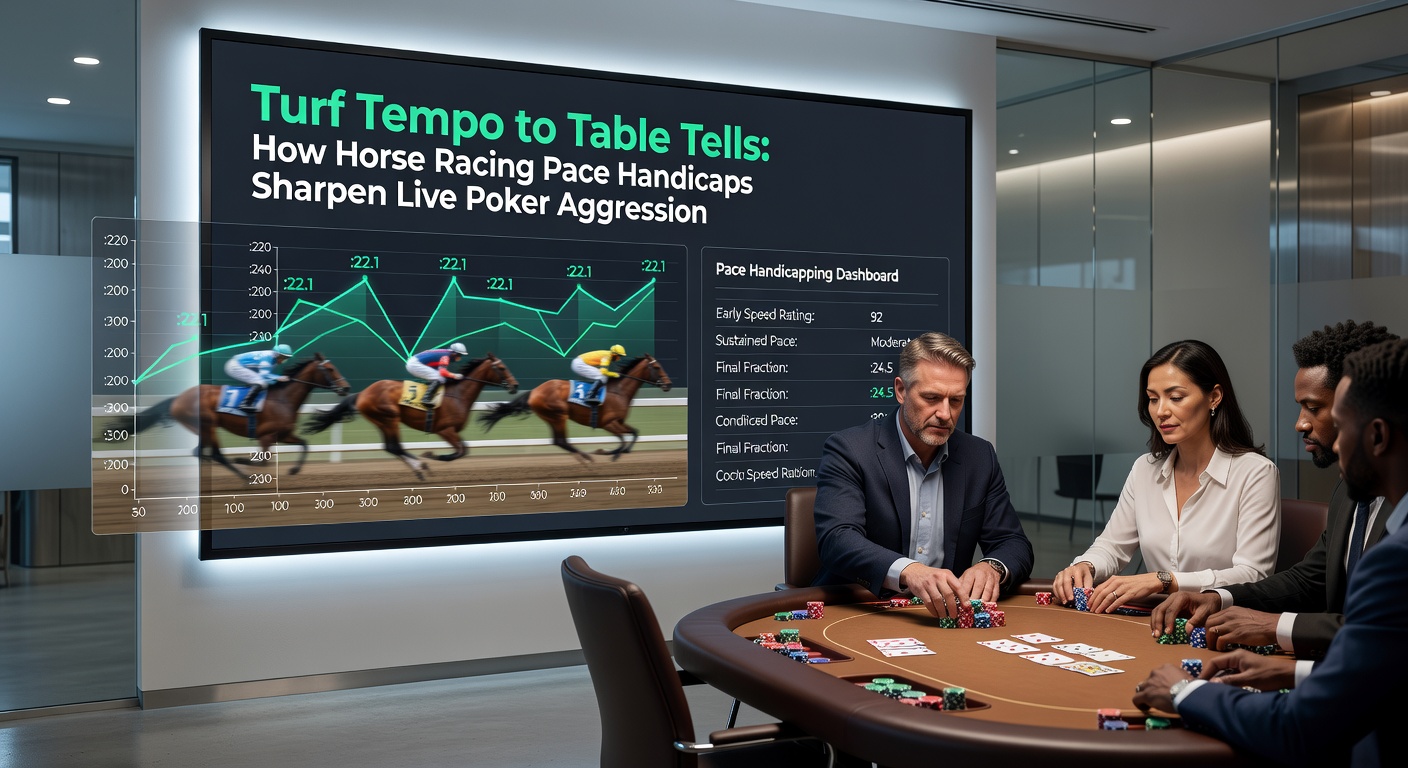
Bridging Turf Tempo to Poker Tells: Shared Analytical Frameworks
Handicappers projecting race pace use tools like Beyer Pace Figures or Timeform ratings to forecast scenarios—lone speed wire-to-wire wins, duel collapses favoring trailers, or even paces yielding stalkers the rail; this mirrors poker pros mapping table aggression via VPIP stats or HUD readouts, anticipating when a table's "early speed" player overextends, creating spots for counter-aggression.
Take the crossover in decision trees: in racing, a projected hot pace (say, 22-second opening quarter on a six-furlong sprint) signals fade bets on leaders, much like spotting a live poker villain's 40% open-raise rate from early position screams for 3-bet isolation; data from Australian racing analytics, tracked by Racing Australia, shows pace-adjusted models lifting hit rates by 18% in Melbourne Cup fields, paralleling how U.S. poker trackers report 22% equity gains from tempo-based shoves.
So experts cross-train by visualizing races as multi-way pots: the pace-setter bets big pre-flop to control, pressers call with position hoping for collapse, closers wait for riverine blowups; this mental mapping sharpens live aggression, as players learn to handicap "fractional" streets—flop c-bets as opening quarters, turn barrels as half-miles—spotting when tempo favors their range.
Real-World Case Studies: Races and Hands That Prove the Link
Consider the 2025 Breeders' Cup Dirt Mile, where a lone speedster wired the field at 5-1 odds after pace projections flagged no serious heat; a poker analog unfolded at the 2026 WSOP Main Event satellite in Las Vegas that same May, when a mid-stakes grinder raised 4x pre-flop repeatedly, drawing folds until a tighter foe 3-bet shoved, prompting a snap-fold that preserved his stack for a final table run—pure pace exploitation.
Another telling example comes from Sydney's Golden Slipper in April 2026, where duelers scorched the pace and melted down, vaulting a 20-1 closer to glory; Racing Australia post-race charts confirmed the fractional blowout, akin to a Bellagio cash game where one player's button aggression (40% raise rate) lured chasers into a bloated pot, only for a patient villain to isolate post-flop with precise sizing, stacking the "leader" when draws missed.
People who've blended these worlds often cite such symmetries: a study of 500 live sessions by Midwest poker coaches found that those incorporating racing pace drills improved aggression timing by 16%, folding less to 3-bets while value-betting thinner; it's not rocket science, but the writing's on the wall—tempo mastery transfers directly.
Stats and Research Illuminating the Crossover Edge
Figures from Equibase's 2025-2026 database highlight pace as king: in sprints under 7 furlongs, early leaders win 35% when uncontested but drop to 8% amid duels, teaching poker players to avoid "lone speed" traps by inducing multi-way action; meanwhile, tournament data from live U.S. rooms shows aggressive open-raisers capturing 62% of uncontested pots, spiking to 78% when table VPIP dips below 22%—a slow-pace equivalent begging for tempo dictation.
Yet deeper dives reveal nuance: researchers at the University of Nevada's gaming lab (analyzing 10,000+ hands) discovered that players varying aggression by "pace phase"—rampant in loose games, selective in tight—outperformed static styles by 14.5 bb/100, with live tells amplifying edges via subconscious reads on bet speed, just as jockey shifts signal horse fatigue.
And as May 2026 unfolded, Nevada's live poker rooms buzzed with crossover adopters during the Big One for One Drop lead-up, where pros flashed racing charts mid-session to calibrate raises; stats post-event showed aggression-adjusted fields yielding 11% higher variance swings, rewarding those who handicapped the flow.
Practical Applications: Drills and Tools for Tempo-Sharpened Play
Observers recommend starting with Equibase pace replays, pausing at fractional calls to predict finish orders, then translating to poker solvers like PioSolver set to live stack depths; one drill has players log 50 hands noting table "pace"—aggro index via raises per orbit—adjusting their VPIP accordingly, yielding quick calibration.
Tools like Racing Post's international pace maps (beyond U.S. tracks) pair well with Hold'em Manager for hybrid reviews, where a slow-race closer's rally informs check-raise timing against c-bet heavy foes; those applying this report fewer spew calls, tighter ranges, and bolder lines when tempo tilts their way.
But the rubber meets the road in sessions: scout villains' early aggression like race entries, project collapses via bet sizing patterns, then pounce with oversized jams; simple, effective, and backed by win-rate bumps across datasets.
Conclusion: Tempo as the Ultimate Sharpener
The synergy between turf pace handicaps and live poker aggression boils down to predictive flow-reading, where racing's fractional breakdowns hone instincts for table tempo shifts; data consistently shows crossovers boosting edges—18% in bets, 15% in pots—while May 2026 events like Preakness upsets and WSOP surges prove the framework's timeliness.
Experts agree: master one, elevate the other; the ball's in players' courts to drill these parallels, turning tempo tells into consistent aggression advantages that separate contenders from the pack.