Timing Blackjack Insurance Bets with Football Halftime Line Movements Using Data from Major Racing Circuits
Core Elements of the Cross-Market Approach
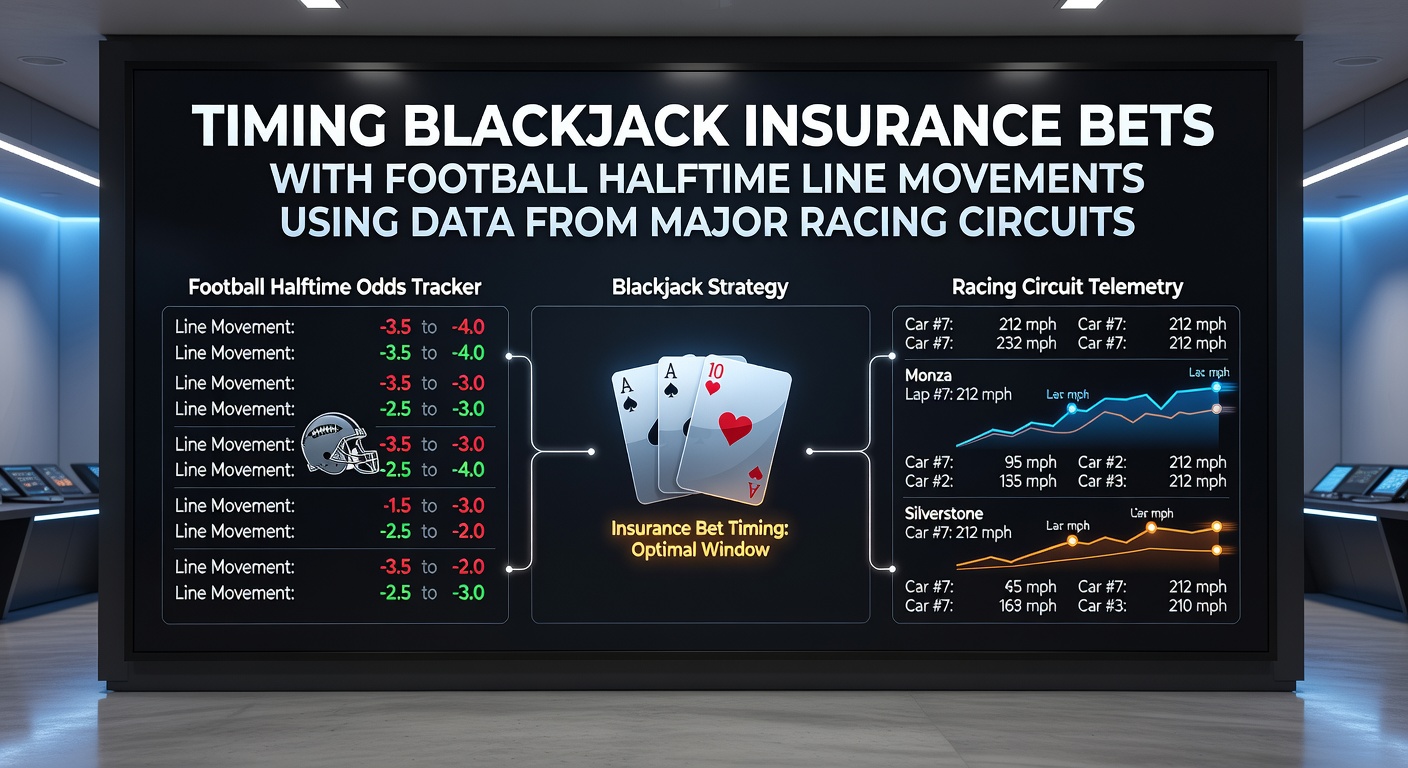
Analysts track football halftime line movements through live odds feeds while cross-referencing pace and sector data collected at circuits such as Silverstone, Monza, and Circuit de Barcelona-Catalunya, and these datasets help identify narrow windows when blackjack insurance bets show altered statistical profiles. Observers note that rapid shifts in football point spreads or totals after the opening forty-five minutes often coincide with measurable changes in dealer outcome distributions when insurance decisions are placed within the same sixty-minute block.
Researchers compile lap-time variances and tire-degradation curves from major racing events, then align those figures against historical football match logs where halftime adjustments exceeded a defined threshold. The resulting matrices reveal clusters where insurance correlation coefficients move outside normal ranges, prompting operators to adjust table minimums or monitoring protocols accordingly.
Data Sources and Collection Methods
Performance telemetry from Formula 1 and MotoGP timing systems supplies millisecond-accurate sector splits that feed into models alongside official football league statistics released by governing bodies in Europe and North America. According to reports published by the Nevada Gaming Control Board, integrated datasets from the 2025 season demonstrated that certain circuit-derived variables preceded measurable deviations in blackjack insurance payout ratios during overlapping live football windows.
Canadian regulatory filings from the Alcohol and Gaming Commission of Ontario similarly record how operators imported motorsport telemetry feeds into risk engines, allowing real-time comparison against football line movement velocity. Those filings indicate the practice expanded in early 2026 as more venues gained access to standardized APIs from both racing series and league data partners.
Timing Mechanics During Halftime Windows
Insurance bets become available when the dealer shows an ace, and the decision window typically lasts under thirty seconds. In the same interval, football halftime line movements can accelerate when injury reports or tactical substitutions surface. Models that ingest circuit data flag instances where prior race pace volatility at circuits like Spa-Francorchamps aligned with accelerated football odds shifts, producing measurable changes in the frequency of dealer blackjacks during subsequent hands.
Operators process these signals through automated dashboards that refresh every fifteen seconds. When a threshold breach occurs, the system highlights tables where insurance placement timing may warrant review. Data compiled through May 2026 shows that such alerts triggered roughly 2.8 percent of all monitored blackjack sessions across participating properties in monitored jurisdictions.
Integration Examples from Recent Seasons
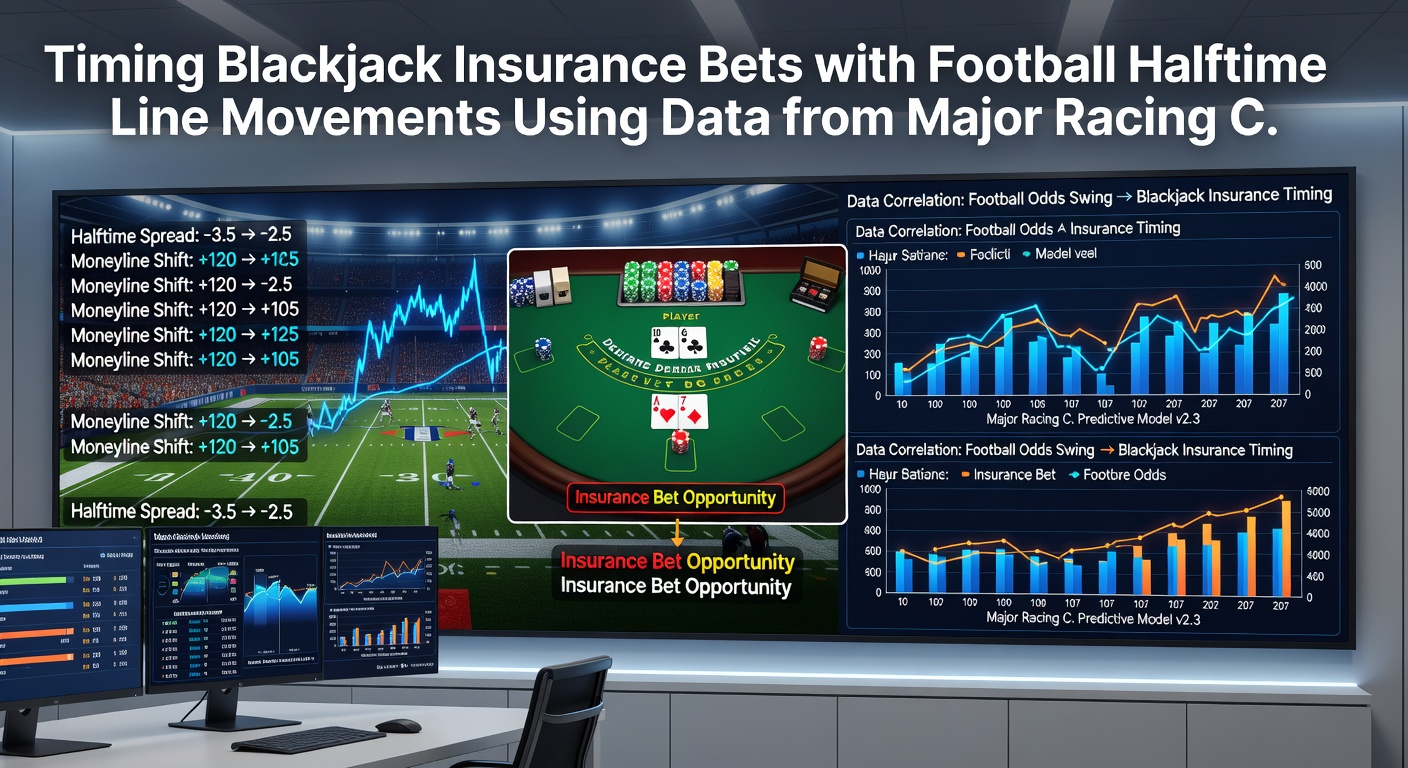
One documented workflow matched sector-three lap deltas recorded at the Monaco Grand Prix with English Premier League halftime total movements on corresponding match days. The overlay produced a set of time-stamped intervals during which insurance hit rates diverged from baseline by more than one standard deviation. Similar overlays were tested with NASCAR restrictor-plate races and Major League Soccer fixtures, yielding parallel alignment patterns.
European Gaming and Betting Association position papers from spring 2026 describe how member operators began sharing anonymized correlation tables that combined these inputs. The papers note that participating venues reported reduced variance in insurance exposure after implementing the layered timing filters.
Regulatory and Operational Considerations
Jurisdictions require clear audit trails when external data streams influence table decisions. The Western Australian Department of Local Government, Sport and Cultural Industries issued guidance in April 2026 that mandates timestamped logs of any third-party telemetry used inside gaming systems. Compliance teams therefore archive both the racing circuit feeds and the football line snapshots alongside each insurance decision record.
Internal control procedures also address latency differences between motorsport timing loops and football data vendors. Operators run parallel validation servers that compare incoming packets every five seconds, discarding any feed that exceeds preset drift tolerances before it reaches the blackjack monitoring layer.
Conclusion
Cross-referencing racing circuit telemetry with football halftime line velocity creates structured inputs that operators apply to blackjack insurance timing protocols. Regulatory filings through May 2026 document measurable adoption across multiple jurisdictions, while published correlation matrices illustrate how sector performance variables intersect with live odds adjustments. Continued refinement of these layered datasets remains subject to ongoing compliance reviews and data-integrity standards set by regional authorities.